
Does Google Penalize AI Content? What Its Own Pages Say
Google does not penalize an article for being written with AI. It acts on pages made in bulk that add nothing. What that means for a business blog.

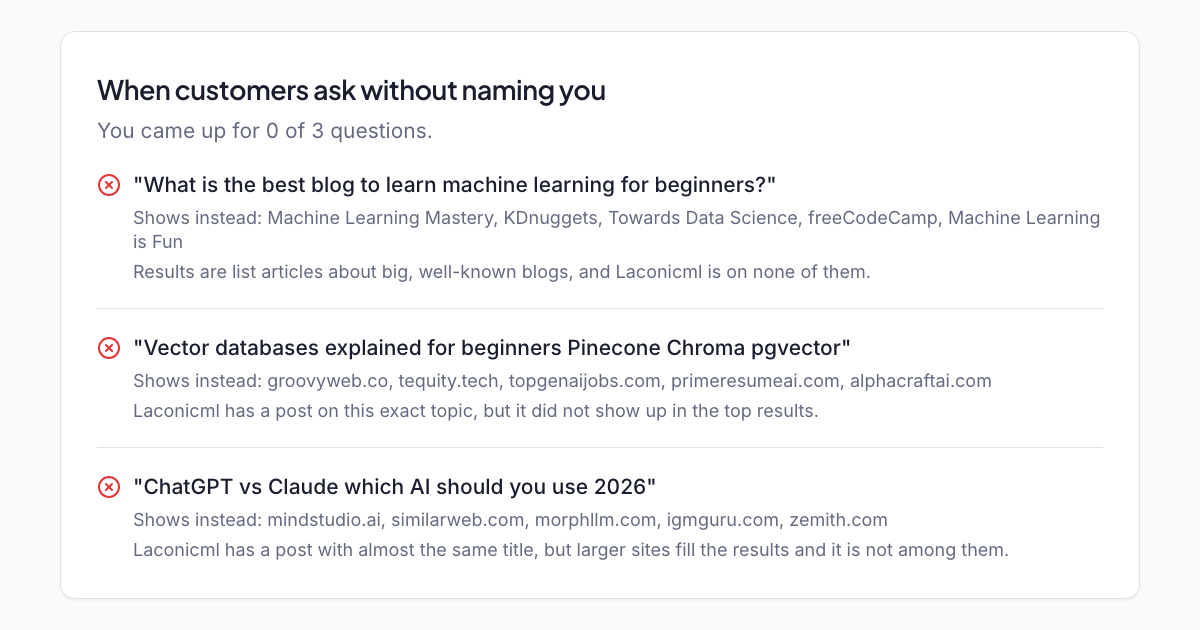
No. Google doesn't penalize an article because AI wrote it. It acts on pages made mainly to manipulate search results, above all many pages that add nothing for the reader, whoever or whatever wrote them. Here is what Google's own pages say and what that means for a business blog.
What Google says
- Using AI is allowed. Google's guidance on generative AI content treats it as a tool, useful for research and structure.
- Bulk pages without value are not. Its spam policies name this scaled content abuse. It's about the purpose and the lack of value, not the tool.
- Check it first. Google recommends fact-checking and reviewing AI content for accuracy before publishing.
- Effort counts. Its page on helpful, people-first content asks whether the page offers something original and leaves the reader satisfied.
What gets a site into trouble
- Publishing far more than anyone could have read.
- Pages that differ only by the city or product name.
- Summaries of other people's pages with nothing added.
- Invented facts: studies that don't exist, quotes nobody said, tests nobody did.
What to do on a business blog
- Write about what you know. Questions your customers ask, in the field you work in.
- Add your own facts. Prices, process, what goes wrong and how you fix it.
- Link sources and open them. If the page doesn't say it, take the line out.
- Never claim experience you don't have. If you didn't test it, don't write that you did.
- Read it before it goes out, at least until you trust how it handles your subject. Always read medical, legal and money topics.
- Keep a pace you can check.
Does Google detect AI writing?
That's the wrong thing to aim at. A page that is useful and true doesn't need to hide how it was made, and a page that isn't won't be saved by passing a detector. Publizo doesn't promise to beat AI detectors.
Should you tell readers?
Google suggests explaining how content was made when readers would reasonably wonder. A named author who stands behind the page and a plain note are enough.
How Publizo handles this
It looks up current sources and links them, and keeps an article as a draft when a source, statistic or personal story looks invented. Money, legal and health topics also get a search of official pages. Each site has a daily limit. You choose draft or live; with live on, topics Autopilot flags as sensitive still wait for you. AI can still be wrong, and you're the publisher.
Frequently asked questions
Can AI articles rank?
Google's guidance judges the page, not the tool. Nobody can promise a ranking.
My traffic fell after I published AI articles. Was it a penalty?
Not necessarily. Look in Search Console under Manual actions. If there's nothing there, compare the dates with Google's published updates and look honestly at which pages help people.
Should I delete old AI articles?
Improve the ones worth keeping: add facts, sources and a clear answer. Remove pages that help nobody.
Publizo writes articles for your own site.
About what your business sells, in your voice, on your site as a draft or live. 3 full articles over 7 days, no card.
Start your free weekFounder of Publizo. Has run websites since 2016.